



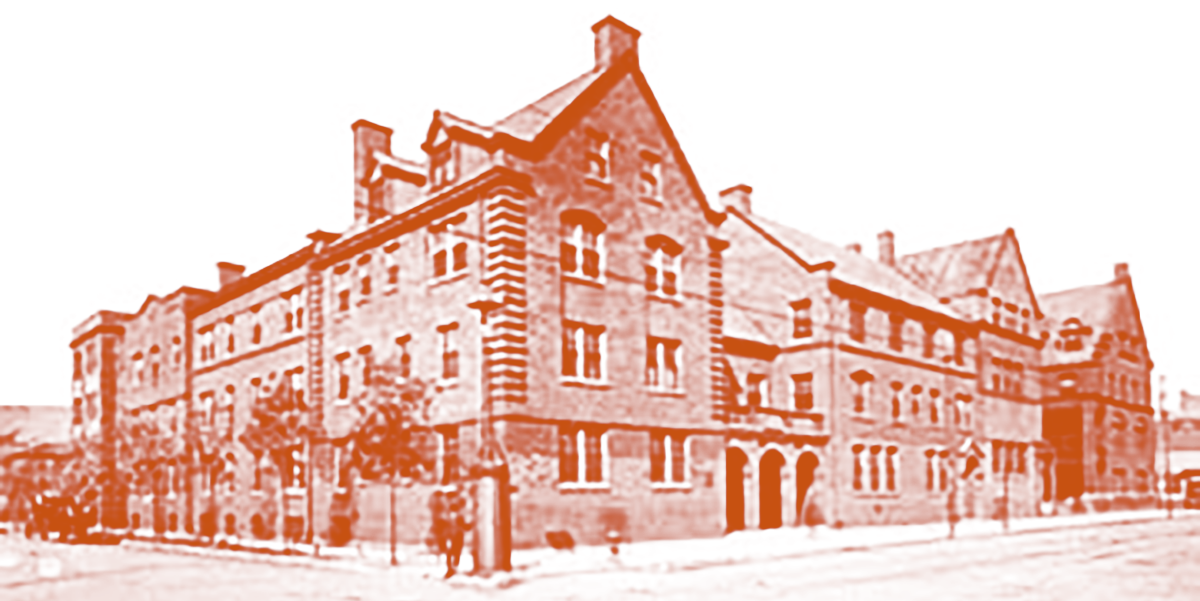
 As a country we seem to be moving far away from the nurturing and sustaining activity of the settlement houses of our past. The first settlement house, established in New York City’s Lower East Side – Neighborhood Guild – was founded by Stanton Coit, and just a few years later came Hull House in Chicago, materializing through the passionate vision of Jane Addams. Settlement houses were the cornerstone of communities as they over time took on the task of educating citizens, providing English language classes for immigrants, organizing employment connections, and offering enrichment and recreation opportunities to all in the neighborhood. A most significant beginning to the current child and youth development field, settlement houses provided childcare services for the children of working mothers. The Immigrants’ Protective League, The Juvenile Protective Association, The Institute for Juvenile Research, The Federal Children’s Bureau, along with Child Labor Laws can all trace back to the persistent national efforts of settlement house founders and advocates.
Today, the health and wellbeing of thousands of children are in peril.It has long been established in the field of child and youth development that caring relationships are key factors in the positive and healthy development of children and youth. Separating children from their primary caring relationship--their parents--is critically detrimental and traumatizing. To grow up healthy and be productive citizens of whatever community and country they attach to, children need to acquire, practice, and effectively apply the skills necessary to understand and manage emotions, set and achieve positive goals, feel and show empathy for others, establish and maintain positive relationships, and make responsible decisions. Adolescents who were besieged by trauma as children cannot undertake successfully the daily tasks of growing-up. Nor can a hostile environment possibly support positive mental health and trust in adults, for even the youngest. The president of the American Academy of Pediatrics has suggested that “children torn from their parents experience serious short- and long-term health consequences.”
Decades of research in the child and youth development fields have made it clear that children need to be surrounded by appropriate structure, safety, supportive relationships, skill-building, high expectations, continuity, and predictability. It is imperative that we do not detach ourselves from these important tenets of caring for all children. We could use the more collective and holistic approach of the settlement house in our methods of organizing immigration. Former first lady, Laura Bush has asked, “In 2018, can we not as a nation find a kinder, more compassionate and more moral answer to this current crisis?” I believe we can and we must--immediately.
Georgia Hall, Ph.D., is director of the National Institute on Out-of-School Time and associate director of the Wellesley Centers for Women at Wellesley College. Hall specializes in research and evaluation on youth development programs, settings, and learning experiences.


 Nan Stein
 services to women and girls who need them. What our clinic staff has seen firsthand is that blocking access to abortion and comprehensive reproductive health care doesn’t stop them from being needed, or even stop them from happening — it just keeps them from being safe. Due in large part to extensive abortion bans throughout the region, 95% of abortions in Latin America are performed in unsafe conditions that threaten the health and lives of women.
 In the mid-1970s, Stanford-based psychologist
 The story of
  capital. It was witnessing homelessness in her city that inspired her to figure out how she and her family could make a real difference, and her “power of half” principle has since become a movement.
 As an integral creative spirit within the Black Arts Movement of the late 1960s and early 1970s, Dr. Angelou’s works of autobiography then poetry helped lay the foundation for Black women’s literature and literary studies, as well as Black feminist and womanist activism today. By laying bare her story, she made it possible to talk publicly and politically about many women’s issues that we now address through organized social movements – rape, incest, child sexual abuse, commercial sexual exploitation, domestic violence, and intimate partner violence. Through the acknowledgement of lesbianism in her writings as well as her public friendship with Black gay writer and activist James Baldwin, she helped shift America’s ability to envision and enact civil rights advances for the LGBTQ community. And the time she spent in Ghana during the early 1960s (where she met W.E.B. DuBois and made friends with Malcolm X, among others), helped Americans of all colors draw connections between the civil rights and Black Power movements in the U.S. and the decolonial independence and Pan-African movements of Africa and the diaspora.

 But how do recruiters on the front-end value a varsity credential? Does sports participation in college, for example, offer access to enter a corporate career?
 director of the Women’s Law Project, who was honored by the
 According to Benard, “we are all born with innate resiliency, with the capacity to develop the traits commonly found in resilient survivors: social competence (responsiveness, cultural flexibility, empathy, caring, communication skills, and a sense of humor); problem-solving (planning, help-seeking, critical and creative thinking); autonomy (sense of identity, self-efficacy, self-awareness, task-mastery, and adaptive distancing from negative messages and conditions); and a sense of purpose and belief in a bright future (goal direction, educational aspirations, optimism, faith, and spiritual connectedness)” (Benard, 1991).
 A few years ago my daughter, while in college in Connecticut, invited me to a community gathering she helped organize on
 As Massachusetts reels from
  The technological world is all around us and developing at a speed that is impossible to keep up with. Adolescents are now more connected to technology than ever before and face both opportunities and obstacles online. Learning to use technology is similar to learning how to drive a car; there are risks involved, and drivers need to learn certain rules and receive gentle guidance before driving on their own. Parents in both scenarios should be in the passenger seat next to their child: setting boundaries, but giving their child the autonomy to eventually thrive on their own. It’s easy to be afraid of the unknown in the digital world, but parental involvement is essential.
 As Father’s Day approaches, many of us are thinking about the role that fathers play in our lives—whether they are our own fathers, our spouses, our relatives, our children. I spend more time than the average person thinking about the role that fathers play. Specifically, I study the conversations they have (or in many cases, don’t have) with their teenage children about sex and relationships, and the effects these conversations have on their teens’ health.
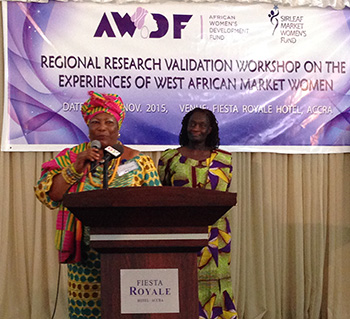
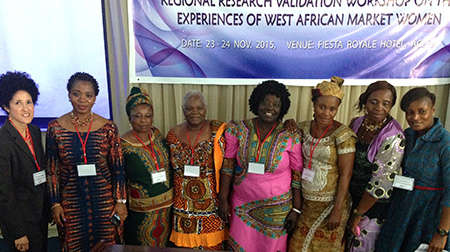
 market women organizations, with a special focus on gender parity in leadership. Although women are, by far, the largest proportion of marketers and traders, often it is the few men who are afforded positions of leadership that allow them to engage with policymakers. The market women who participated in our study would like to see women’s voices rise to the top and for women’s leadership to be recognized with top-level posts. Additionally, they indicated that the time might be right for a West Africa-wide market women’s organization that allowed market women from different countries to network, share best practices, and shape policy that affects them. Many touted the Sirleaf Market Women’s Fund as a good example of a multi-constituency organization that has raised the visibility of market women’s issues at the same time as it has brought different stakeholders together for a common cause, and they imagined this model growing from its roots in Liberia to other countries. Additionally, the pivotal roles of the African Women’s Development Fund, UN Women, and Ford, all of which have provided funding for market women’s issues and related actions, were lauded as model donors.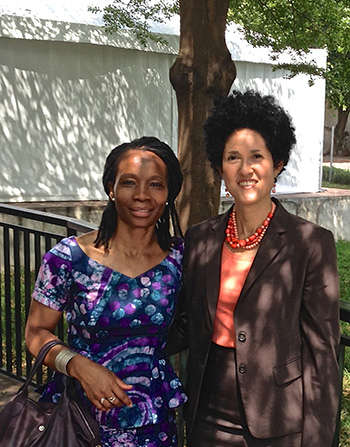

 What better place to foster a love of reading and engage children in a variety of literacy activities than in out-of-school time (OST) programs? Research shows that OST programs can support the development of and excitement about literacy in a setting where children feel comfortable.
 Beginning in the mid-1990s, with my colleague, Benjamin E. Saunders, Ph.D., of the Medical University of South Carolina, and a team of researchers, I conducted an
  Last year, the U.S. Surgeon General
 With a collection of government stamps in hand, I now needed to secure the tribal backing for the project. Government approval merely made my NGO official, but without the tribal endorsement, my effort to educate girls would be just another import with a short shelf life.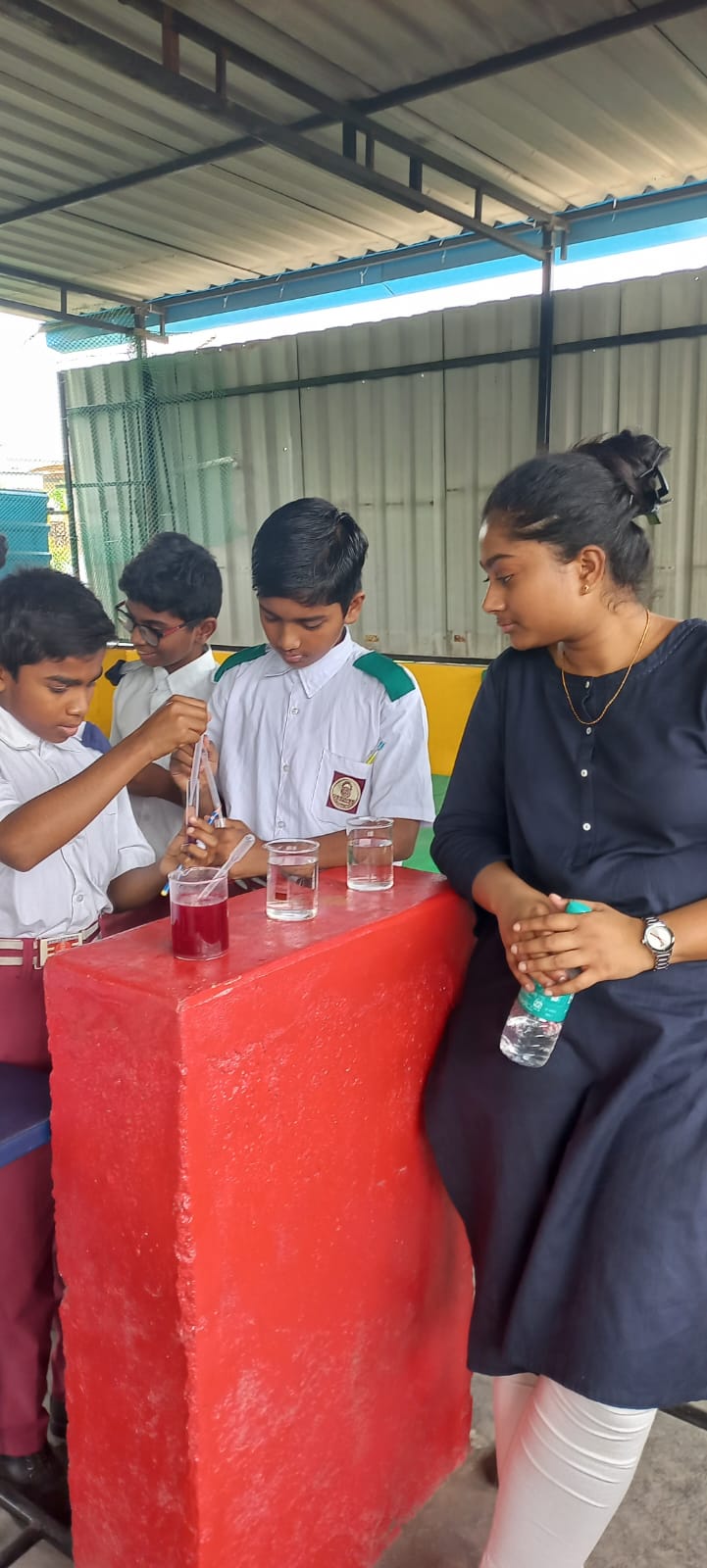
 This week, the
 Below is an excerpt by Betsy Nordell, Ed.D., a NIOST master observer, from the book
 institutional changes. Until then, it is largely up to mentors to influence the capable and powerful young women who may otherwise slip through the (huge) cracks.
 About 20 tweens pile into the unassuming studio space of their ballet school in mid-July. There are no frills here. The waiting area is small and a bit disheveled; the cinder block building has seen its share of life. But look closer: there’s magic inside.



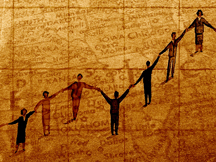
 A model for human experience that emphasizes our separateness works against our sense of basic connection and belonging. It leads us to believe that we should function autonomously in situations where that is impossible. By placing unattainable standards of individualism on us, it leaves us vulnerable to feeling even more inadequate, ashamed, and stressed out. There is abundant data that social ties are decreasing in the U.S.; more and more people feel they can trust no one. (Putnam, R. 2000 Bowling Alone: The collapse and revival of American community. New York: Simon and Schuster.) And traditional psychology with its overemphasis on internal, individual problems contributes to our failure, at a societal level, to invest in social justice and social support programs. Rather than addressing the problems in a society that disempower us and perpetuate systems of injustice, we have tended to locate the problems in the individual.

 So, where are all the people with mental illness? From what I hear in my office, many are hiding and suffering in silence for fear of being stigmatized, pitied, or seen as weak. American, Westernized culture plays a large role in this fear. The pervasive image of an American is a person who is strong, independent, and can
 human nervous system is literally wired to function best when in
 killers flood your system buffering the pain. Neither of these reactions are under your conscious control. You are automatically protected.
 I was many things at ten years old, but one thing I wasn't was accepted. My family moved to a new town that summer—it was 1972—and on the first day of school when the school bell rang I stood in the middle of the girls’ line anxiously waiting to meet my new classmates. As I was studying my shoes I heard the laughter and the whispering, “What is that new boy doing in the girls line!” They were talking about me, well-dressed in boys clothing. I was humiliated, filled with shame, desperate to go back to my old school where people knew and accepted me. It was a long year of pain, accentuated by my teacher who routinely tried to force me to join the Girl Scouts.
 This is where the story gets really interesting. The area that lit up when a subject was excluded is a strip of brain called the
 Deep in my brain, the area in the prefrontal cortex that plans and executes the physical movement of walking out the door is being stimulated. Though I am not moving, the same nerve cells are firing. When you touch the door and pull your hand away quickly and shake it a little I “know” that the door was quite hot from the pounding sunshine on the glass. My somatosensory cortex that creates sensations fires and my hand feels a low-grade sense of heat and smoothness from the window window. That is added to the immediate mix of how I am reading your experience. And finally, you walk through the door and a large smile crosses your face as you fall into the arms of a loved one. In my brain and body the nerve signal has now traveled through the insula into my “feeling centers” in my body and I feel a similar joy and lightness. I “know” you are with someone you love. All of this has happened in the blink of an eye and without you sharing any of your experience with me. My brain and body uses itself as a template to have a shared experience with you and the closer our life experiences internally have been, the more resonant we feel.
 So dopamine itself is not the problem, nor is the dopamine reward system. Dopamine is simply the carrot on a stick designed to give a reward to life-sustaining activities like eating healthy food, having sex, drinking water, and being held in nurturing relationships so that you would keep doing these healthy things over and over again. The problem is how we stimulate the dopamine pathway. In an ideal world—one that understands the centrality of healthy relationship to health and wellness—the dopamine reward system stays connected to human connection as the primary source of stimulation. Unfortunately, we do not live in this ideal world. We live in a culture that actively undermines this precious dopamine-relationship connection. We raise children to stand on their own two feet while the separate self is an American icon of maturity. It is making us sick.

 I could not help but be reminded of something that my grandmother Donnie would say to young people in our family. If anyone one of us dared to violate her standards of good grooming or “respectable” behavior, she would say: “Don’t go out acting like you don’t have people.” At the time, her counsel was little more than an irritation. “Having people” could mean anything from representing your family by working hard in school to properly ironing a ruffled blouse. It’s a safe bet that my grandmother never heard of Maslow, and I’m guessing she lived the better part of eight decades without ever using the words “self-esteem.” She did, however, know a lot about respect, reverence, and dignity. What we now call self-esteem is what my grandmother expressed as self and other--awareness. Her version of self-esteem was awareness of connection to community. Further, it meant appreciation for the care that community bestows, and an obligation to represent that care in the world and to the world. Put plainly the lesson was this: how you go out into the world is not just your private business; your behavior reflects on and has consequences for the communities from which you come.
 One of the foundational tenets of Relational-Cultural Theory is that the purpose of being in relationship. Having a sense of agency then is to claim our responsibility as co-creators of human possibility. I can think of a no more telling example of this perspective than a conversation I had with a young Indonesian man a few years ago. He told me that as a member of a religious minority in his country, he knew that he had to work twice as hard to get half as far: precisely the advice that I had heard growing up in a racially stratified culture decades earlier. Interestingly, this belief did not engender defeatism or victimhood. Rather, it confirmed the obligation to community: to advance the contributions of preceding generations and to provide “uplift” for future generations. Further, it instilled confidence in our ability and obligation to make the world a little bit better for others.

 media; compelling stage models have been proposed first by Poston (1990) and then expanded by Kerwin and Ponterotto (1995). In addition, Fhagen-Smith’s (2003) WCW Working Paper also described a stage model of mixed ancestry identity development. Children grow up taking on the identity community to them by their immediate family for the most part, although
  As I reflected earlier this month on
  But the very fact that we can clearly delineate “black sports” and “white sports” is not an accident but something nurtured and presumed. If sports are more than athletic contests—if they have social, economic, and political value—we must care who gets to play.

 Treating youth depression once it emerges may be much more distressing, and much less effective, than identifying early symptoms of illness and treating them before they develop into a full-blown disorder. Prevention approaches have the potential to reach a large number of adolescents, and may be more acceptable than treatment because services can be rendered in non-clinical settings (e.g., schools, primary care settings), and do not require adolescents to identify themselves as ill.
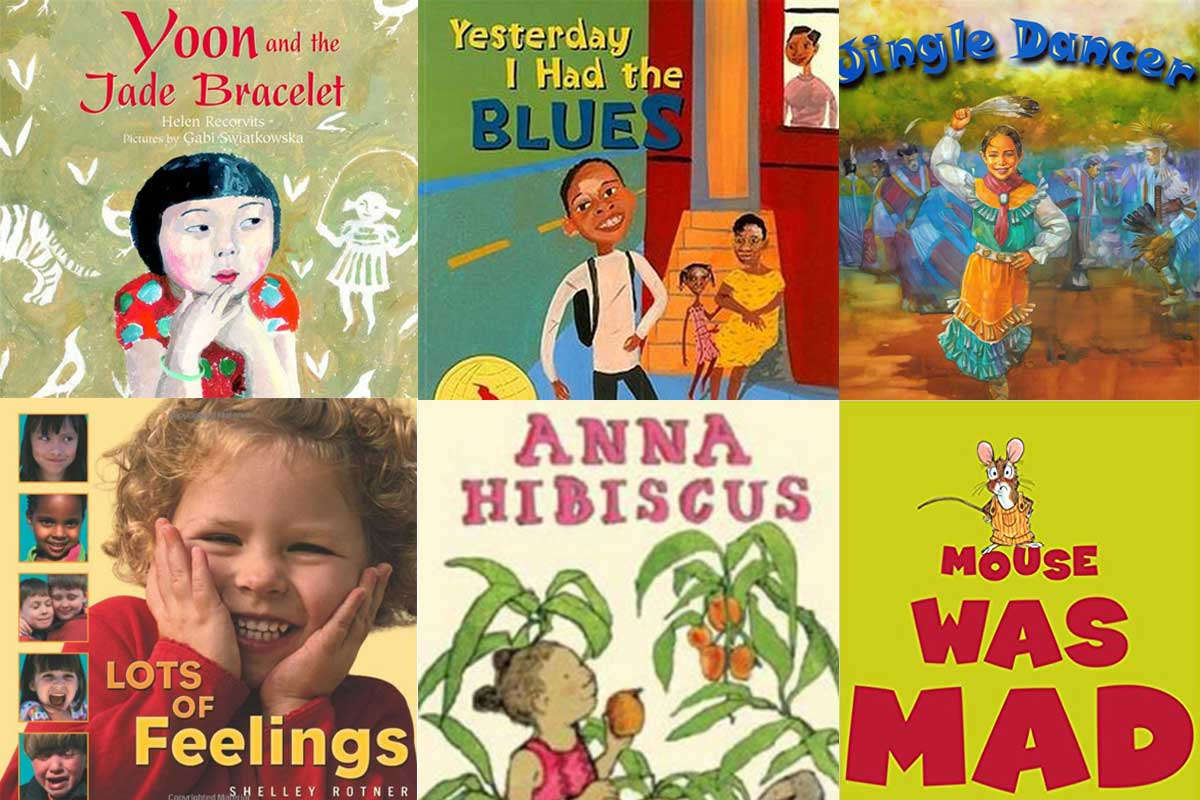 The fifth-grader’s voice was full of emotion as he shouted, “That’s not fair! What a mean thing to do!”