


 A recent study out of University College London confirmed a very strong connection between social media use and depressive symptoms in teenagers. And this connection was much stronger in girls than in boys. (This does not mean that social media causes depression -- it just means that we know that children who use more social media have more depressive symptoms. More research needs to be done to figure out the reason behind this.)
The researchers looked at four explanations for why this might be. Poor sleep, online harassment, poor self-esteem, and poor body image all played a role.
My mind’s eye went immediately to my three wonderful, intelligent, strong and independent daughters, and to the social media apps that are such an integral part of their lives. My 15-year-old texts and video-chats with her friends through Snapchat, FaceTime and Whatsapp. My 13-year-old creates lip-syncing videos to share with her buddies via TikTok. And my 9-year-old immerses herself in a virtual zoological Animal Jam world of colorful biomes and customizable animals.
These apps provide positive experiences, such as socializing with friends, expressing emotions through creative cinematography, and learning facts about wildlife and its habitats. My little one often claims, “I’m so much better at typing now that I am using Animal Jam all the time!” Indeed, there is something to be said for the technical savvy that children are picking up as they navigate their way through social media landscapes that often baffle the older generation. If electronic communication is the way of the future, then it can be helpful to hone their digital skills at early ages.
In fact, there are a myriad of benefits to social media. The American Academy of Pediatrics lists a few: offering of opportunities for community engagement, such as political or charitable events; fostering of ideas through blogs, videos, podcasts and games; opening of doors to connect with people of diverse backgrounds in a much smaller and more interconnected global world; enhancing of learning opportunities as students gather together in group chats to work on homework or projects; and greater access to health information about topics that teens might otherwise not feel comfortable discussing with adults (such as mental or sexual health issues).
So there are pros and cons. This leaves us with so many questions. How do we parents find the balance? That sweet spot where they reap the benefits but are protected from the pitfalls? How much do we need to worry about impending depression or anxiety creeping up on them? How much time is too much time on social media? What can I do to mitigate these scary-sounding effects the devices might be having on my children?
I don’t have all the answers, but I do have some thoughts on how parents can help teens use social media thoughtfully and appropriately:
- Create screen-free zones, such as bedrooms and kitchen tables. And screen-free times such as mealtime and before bedtime. This will help reduce the amount of time kids are on their devices and allow for better quality and quantity sleep. (The devices might need to be given a “curfew” to enforce this tactic. A charging station in the kitchen or other central room can also be a good spot to park the devices for the night.)
- Open the lines of communication with your kids. Talk to them about their social media experiences. Educate them about the advantages and disadvantages. Have ongoing conversations about anything they want to talk about, and reassure them that you are the trusted adult they can turn to if/when they become mired in teenage angst.
- Keep in mind that it is not only quantity, but quality, that is important. Keep abreast of the apps your children are using, and encourage them to use social media in positive ways.
- Avoid banning, blocking or restricting your kids’ access to social media sites. This generally doesn’t work and may backfire if the forbidden fruit becomes so tempting that they simply use it behind your back.
- Be a good example to your kids. Use your own devices less! Engage with your children, and on your own, in non-screen activities. Enjoy the outdoors, read a book, play a game, do some fun activities as a family. Wax nostalgic for the days of yore when smartphones didn’t exist but people still knew how to enjoy!
My three girls are living in the wild west of cyberspace, with a frontier that is open to exploration. I hope that I can help guide them to that sweet spot of not-too-much and not-too-little, so that they enjoy the positive without enduring the negative along the way.
Elana Pearl Ben-Joseph, MD, is a visiting scholar with the Youth, Media & Wellbeing Research Lab at the Wellesley Centers for Women. She is also a pediatrician and chief medical and scientific editor at Unbiased Science.
 Video games are on my mind these days. Especially violent ones, like Call of Duty or Grand Theft Auto. But special recognition goes to
 The technological world is all around us and developing at a speed that is impossible to keep up with. Adolescents are now more connected to technology than ever before and face both opportunities and obstacles online. Learning to use technology is similar to learning how to drive a car; there are risks involved, and drivers need to learn certain rules and receive gentle guidance before driving on their own. Parents in both scenarios should be in the passenger seat next to their child: setting boundaries, but giving their child the autonomy to eventually thrive on their own. It’s easy to be afraid of the unknown in the digital world, but parental involvement is essential.
  Last year, the U.S. Surgeon General


 Media coverage about social media has not been kind—often linking its use with cyberbullying, sexual predators, and depression or loneliness. But recent scholarship on new media demonstrates that interpersonal communication, online and offline, plays a vital role in integrating people into their communities by helping them build support, maintain ties, and promote trust. Social media is often used to escape from the pressures of life and alter moods, to secure an audience for self-disclosures, and to widen social networks and increase social capital. The



 By the end of my first year at Wellesley College, I knew that I wanted to explore the world of research. I had taken the first of many gender studies courses to come, and left class with a head full of questions that I not only wanted answers to, but wanted to take a stake at answering. A stroke of luck brought me to an event for students to meet with research scientists at the Wellesley Center for Women. A stroke of better luck brought me to Dr.
  The power of representation became personal when I began to cultivate a mentor-mentee relationship with Linda. Our weekly/bi-weekly research check-ins were not only crucial for the advancement of the qualitative research we were conducting and my own research skills, but also for developing my own sense of worth and potential. Little by little, I was able to learn about Linda’s life and experiences, research and otherwise. I found out she was Thai (like me)! I found out that she also struggled in her undergraduate years (who knew that researchers were not perfect?). She spoke about her queerness in ways that normalized my own burgeoning questions about sexuality and gender. She validated my questions, hopes, and fears no matter how naive, incomplete, or overwhelming. I was learning so much from someone who shared my most salient identities - - from a successful academic whose work brimmed with passion. If she could do it, maybe I could too.
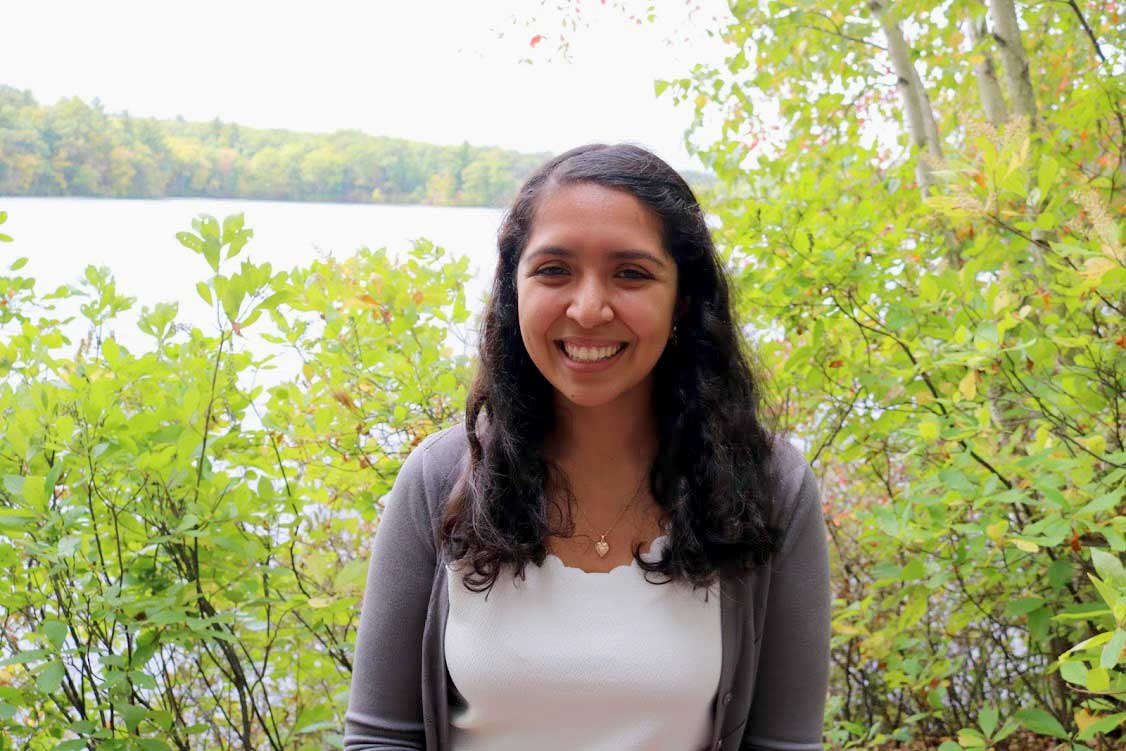 It is the spring of 2020, and my senior year at Wellesley College is not at all what I imagined it would be like. Before concerns about COVID-19 led
  I never knew that I would have the opportunity to do social science research as an undergraduate until I got to Wellesley College. Towards the end of my first year, with my academic interests starting to gravitate toward Sociology and South Asia Studies, I knew I wanted to connect the concepts I was learning in the classroom to action-oriented research that produced tangible results for communities that I cared about. Through the helpful guidance of my peers, professors, and mentors, I discovered that I could get that opportunity by working at the Wellesley Centers for Women.
