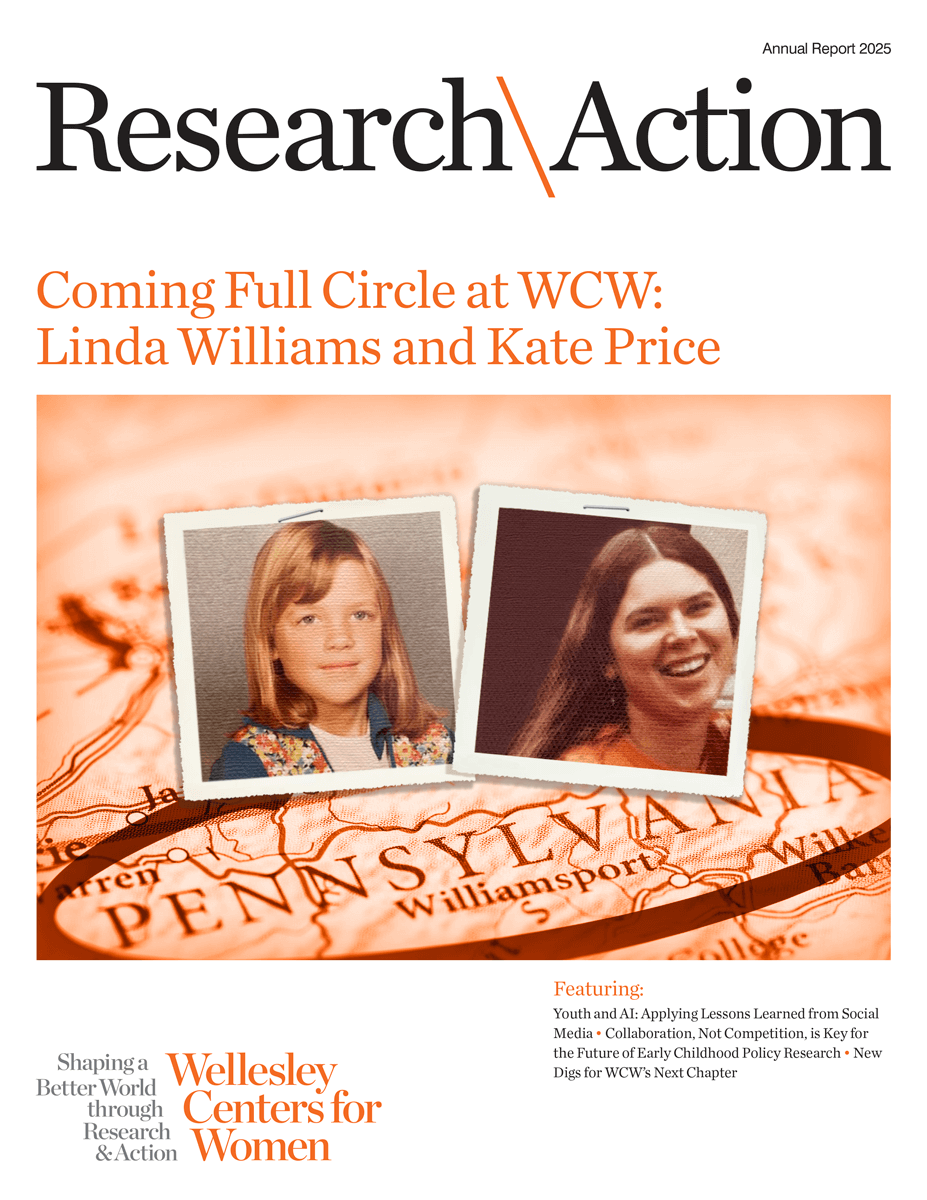
Senior Research Scientist Linda M. Williams, Ph.D., and Associate Research Scientist Kate Price, Ph.D., discuss how their paths have crossed—or almost crossed—over the course of their lives, ultimately leading to their research collaboration at WCW.
Content warning: This article discusses sexual assault, child sexual abuse, and the commercial sexual exploitation of children.
Kate, you were a child living in rural Pennsylvania in the early 1970s. Give us a snapshot of what your life was like and what you were enduring.
Every day was just survival, particularly the first 12 years of my life when my father was living in our home. I can still see his truck rounding the corner when he came home from work. He was physically and sexually abusing me. And also, I remember at the time being drugged and lifted out of bed in the middle of the night, and I didn't quite understand what was happening. Through research—I was going to be a sociologist no matter what happened to me—I was able to put together over the course of decades that my father was trafficking me. He was taking me to a rest area on a highway near our home in northern Appalachia, and sometimes he was also taking me to parties and to an adult movie theater.
Linda, you were two-and-a-half hours away at the University of Pennsylvania during this time. Tell us what you were working on and what you were learning about child sexual abuse.
I was in my mid-20s, finishing up my Ph.D. in sociology. I was directing research on the social and psychological consequences of rape and sexual assault, and we were interviewing victims brought in by the police to a huge city hospital. We went into it assuming that the women had been raped by men who were mostly strangers, people they didn't know jumping out at them as they walked down the street. But what we found, of course, was that sexual assault usually happened at the hands of people the women knew.
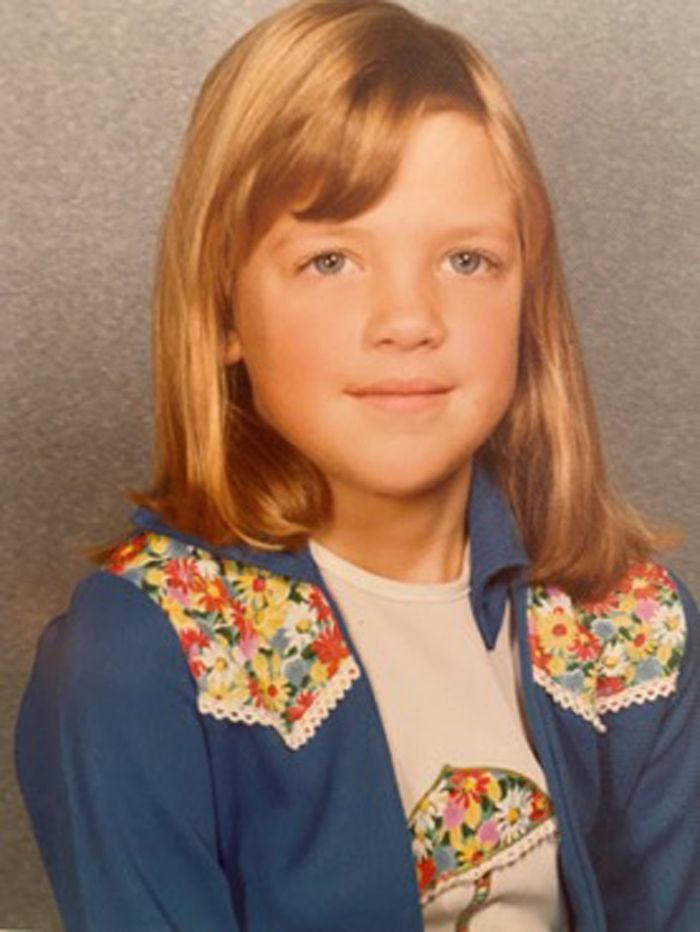 Kate Price as a child in Pennsylvania in the 1970s.We were also finding that many reports of sexual assault—many more than we ever expected—involved young children and adolescents. We were learning a lot about what had happened and how kids were affected and who was doing it—very often family members, as was the case with Kate. This was an eye-opener, even to people who worked in the field. I did a TV interview at the time, and the reporter asked me to estimate the number of child sexual abuse cases in the country as a whole. I came up with a number that was so low, something like 2,500 cases. We now know that it’s many tens of thousands of cases reported every year, and most cases are still unreported.
Years later in my research, I found that more than a third of the child sexual abuse survivors I interviewed did not appear to recall the abuse that happened to them in childhood. This was some of the first scientific evidence of buried memories, as Kate had experienced.
Kate, how did you decide you could be both a survivor and a researcher? Why is WCW the right place for you?
I did my first public speaking engagement as a survivor a few months after I finished my master's degree in 2005. And the practitioners in the room—social workers, law enforcement officers—found what I had to say interesting and helpful, and they told me that I was talking about research and theoretical concepts in plain language, in a way that could be applied to the systems they worked in.
And so, I sat down with my husband and my therapist and said: Would it be damaging for me to continue to do this work, or is it a way I can really contribute? Because it does feel like a calling. And after a lot of thought and conversations, I decided I could do it and I wanted to do it.
When I talk about WCW, my face lights up. I truly believe this is one of the very few places in the world that I could be doing the work that I'm doing, because we are so focused on research and action. We are doing the research so that we can influence policy, practice, and theory. I really want to be able to make change.
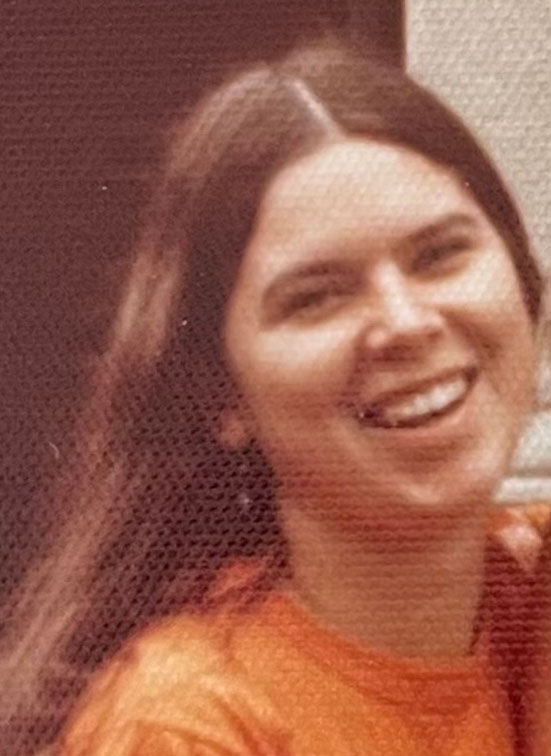 Linda Williams as a Ph.D. student at the University of Pennsylvania in the 1970s.Linda, what is special to you about WCW and about working with a survivor like Kate?
For me, WCW is a home for scientific research that's going to reach others and hopefully make a difference. I never wanted my work on sexual violence simply to be published and then sit on a shelf. Since my research in Pennsylvania so many years ago, I have focused on understanding more about the causes and consequences of sexual violence and received funding to learn more about topics with little prior scientific study. WCW has provided an environment where this work can be done alongside researchers who collaborate closely with communities, practitioners, and policymakers. We have had to adapt and even re-invent some methodologies—always with the goal of conducting sound research and learning from survivors while protecting their privacy.
So when WCW attracts Kate, a survivor who is a resolute and highly qualified social science researcher, then our work can have a remarkable impact. Survivors' voices have been and are critical to this work. Much in this field that has changed for the better came from the voices of survivors helping us understand how to improve policing and hospital response, psychology and therapy.
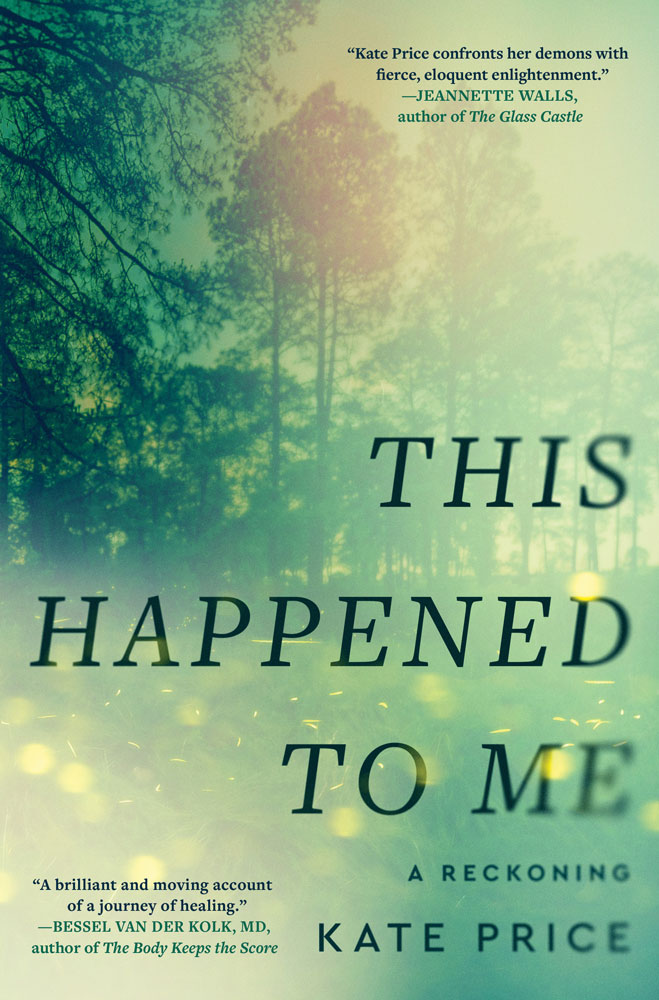 Price’s memoir This Happened to Me: A Reckoning was published in August.Kate, you and Linda are pursuing the first national study on familial commercial sexual exploitation of children. What is it like to come full circle and work together?
I always think of it as alignment. I'm not surprised that we're working together. Even when I was a little kid, and I didn't quite understand what was happening to me, and it was awful, I always had this sense that there were people out there who cared. Being able to put a face to that sense and knowing Linda and so many other people who’ve been doing this work for a very long time—I'm just incredibly honored to stand by her. Her research laid the foundation and made it possible for me to do the work I’m doing now.
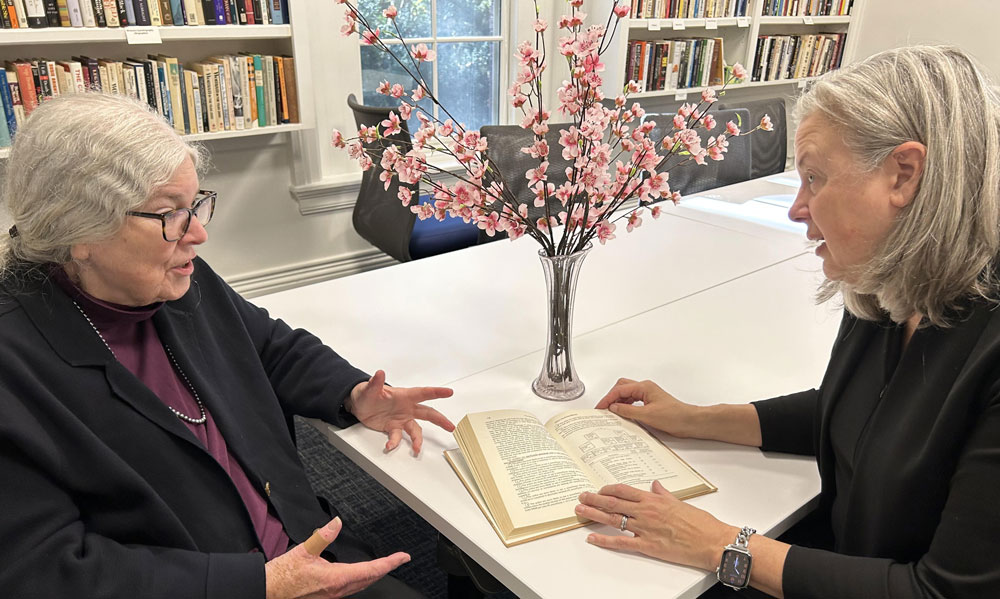 Senior Research Scientist Linda M. Williams, Ph.D., and Associate Research Scientist Kate Price, Ph.D., are members of WCW’s Justice and Gender-Based Violence Research Initiative.